Holistic Chronic Back Pain Management | BodyPlus Osteopathy
22 May 2026
Osteopathy for Mental Health: Supporting Your Mind and Body
29 May 2026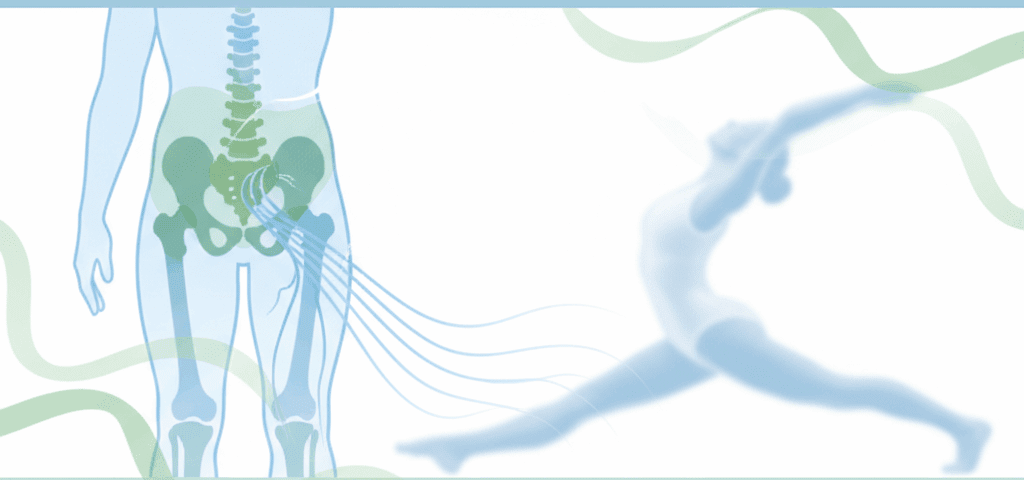
If you have ever experienced a sharp, shooting pain that radiates from your lower back, through your hip, and down your leg, you know exactly how debilitating sciatica can be. It is more than just a “sore back”; it is a condition that can make sitting, standing, or even sleeping feel impossible. Often, the instinct is to rest completely, but for many sufferers, gentle movement and specific nerve mobilisation techniques are the keys to lasting relief.
What Exactly is Sciatica?
Sciatica is not a diagnosis in itself, but rather a description of symptoms caused by the irritation or compression of the sciatic nerve—the longest and widest nerve in the human body. This nerve starts in your lower back, runs through your buttocks, and branches down each leg to your feet.
Common causes include a herniated disc, spinal stenosis, or even tight muscles in the gluteal region (often referred to as Piriformis Syndrome). While the pain can be intense, the good news is that most cases of sciatica respond exceptionally well to conservative care, including osteopathic treatment and targeted home exercises.
The Role of Nerve Mobilisation
You may be familiar with stretching a muscle, but “stretching” a nerve is a slightly different concept. Nerves don’t like to be pulled tight; instead, they prefer to “glide” through the surrounding tissues. When a nerve becomes compressed or irritated, it can become “sticky” or tethered, leading to increased sensitivity and pain.
Nerve mobilisation, often called nerve flossing or gliding, involves gentle movements designed to slide the nerve back and forth through its pathway. By improving the mobility of the sciatic nerve, we can reduce inflammation and help the nerve recover its natural function without causing further irritation.
Top Sciatica Stretches and Glides for Daily Relief
Before beginning any exercise regime, it is essential to ensure the movements do not increase your “peripheral” symptoms (pain moving further down the leg). If you are unsure whether these exercises are right for your specific condition, it is always best to get in touch with our team for a professional assessment.
1. The Sciatic Nerve Glide (Seated)
This is a foundational exercise for nerve irritation. The goal is to move the nerve without putting it under excessive tension.
- Sit tall in a chair with your back supported.
- Straighten one knee as much as comfortable while looking up slightly toward the ceiling.
- As you bend your knee back down, tuck your chin toward your chest.
- Continue this “teeter-totter” motion smoothly for 10–12 repetitions.
- Note: Do not hold the position at the point of pain; keep the movement fluid.
2. Decompression (Child’s Pose)
While often associated with yoga, this pose is excellent for opening up the spaces between the vertebrae in the lower back, potentially reducing pressure on the nerve roots.
- Kneel on the floor, sit back on your heels, and reach your arms forward on the ground.
- Take deep breaths into your lower back.
- Hold for 30–60 seconds, allowing your spine to lengthen.
3. Knee-to-Chest Stretch
This movement helps to improve the flexibility of the lower back and can ease the tension in the gluteal muscles that often contribute to sciatic discomfort.
- Lie on your back on a firm surface.
- Gently bring one knee up towards your chest, holding it with both hands.
- Hold for 20–30 seconds, then repeat on the other side.
- If this feels comfortable, try bringing both knees to your chest simultaneously.
4. Modified Pigeon Stretch (Supine)
Tightness in the piriformis muscle can put direct pressure on the sciatic nerve. This “figure-four” stretch is a safer way to target the hip than the traditional floor pigeon pose.
- Lie on your back with both knees bent and feet flat on the floor.
- Cross your affected leg’s ankle over the opposite knee.
- Gently pull the unaffected thigh toward your chest until you feel a stretch in the buttock of the affected side.
- Hold for 30 seconds and breathe deeply.
Why Osteopathy for Sciatica?
While home stretches are a vital part of recovery, they work best when combined with professional manual therapy. At BodyPlus Osteopathy, we look beyond just the site of pain. We examine how your pelvis, hips, and spine are moving as a whole unit.
Unlike other disciplines that might focus solely on the painful area, an osteopath uses a “whole-body” approach. We may use gentle joint mobilisation, soft tissue massage, and medical acupuncture to reduce muscle guarding and improve blood flow to the affected nerve. By addressing the root cause—be it a stiff sacroiliac joint or a pelvic imbalance—we help prevent the sciatica from returning in the future.
Practical Tips for Managing Sciatica at Home
In addition to your stretches, these small lifestyle adjustments can make a significant difference in your recovery speed:
- Avoid Prolonged Sitting: Sitting increases the load on your lower spinal discs. Try to stand up and walk around every 20-30 minutes.
- Check Your Footwear: Flat, unsupportive shoes can change your gait and put extra strain on your lower back. Opt for supportive footwear where possible.
- Use Heat or Ice: If the pain is acute (new), ice packs can help reduce inflammation. For chronic, dull aches, a heat pad can relax the surrounding muscles.
- Sleep Position: If you sleep on your side, place a pillow between your knees to keep your hips aligned. If you sleep on your back, place a pillow under your knees to reduce the arch in your lower back.
When to Seek Urgent Medical Advice
While most sciatica can be managed with osteopathy and exercise, there are “red flag” symptoms that require immediate medical attention. Please visit A&E or call 111 if you experience:
- Sudden, severe weakness or numbness in both legs.
- Loss of bladder or bowel control.
- Numbness in the “saddle area” (groin and inner thighs).
Start Your Journey to Pain-Free Movement
Sciatica can feel overwhelming, but you don’t have to manage it alone. Understanding the difference between a simple muscle stretch and a nerve mobilisation glide is the first step toward reclaiming your mobility. By combining specific home movements with expert osteopathic care, we can help you move from a state of pain to a state of performance.
Our team at BodyPlus Osteopathy in Brentwood is dedicated to providing personalised care plans that address your unique symptoms and lifestyle needs. Whether you are struggling with a recent flare-up or have been dealing with chronic leg pain for months, we are here to help.
Ready to get back to the activities you love? Book an appointment today with one of our experienced osteopaths and let’s start your recovery.